Interior works · Kitchen and bath
Kitchen and bath renovation order: fix water first, then the surfaces you see
Whether kitchen and bath turn out well is often decided before you ever see the new cabinet doors.
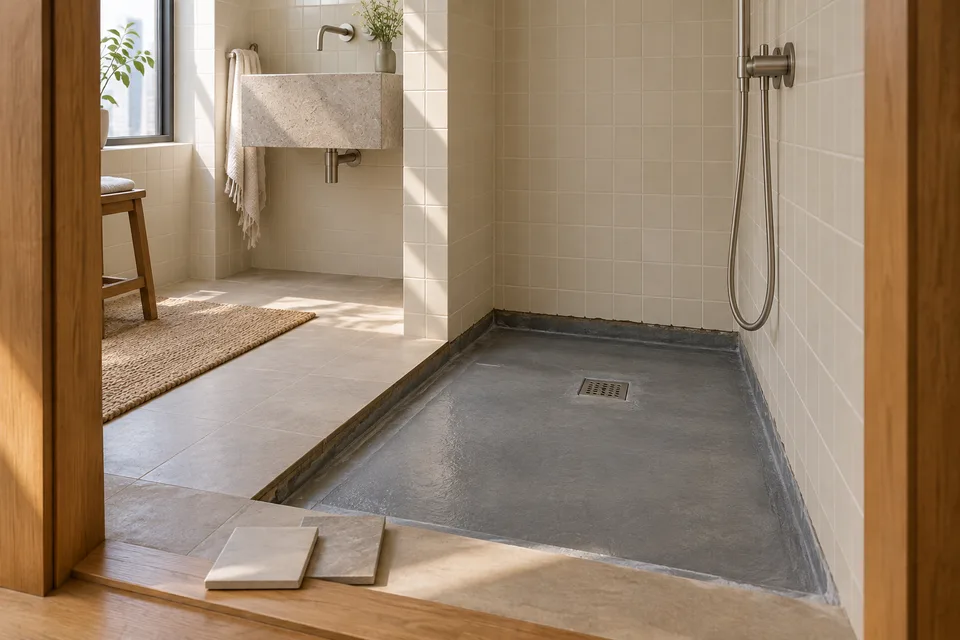
In this article5 sections
Hong Kong kitchen and bathroom renovation should settle drainage, waterproofing and protection before installing cabinets and sanitaryware. Put wet-area scope in the same brief so firms reply in the same order—not just compare door colours.
Wet areas are not just “make it look nicer”
Kitchen and bathroom concentrate water, power, heat and storage. Hong Kong flats are small, and these rooms are often the pain points: slow drainage, mould under cabinets, dim light, nowhere for cleaning products. Many people pick door colours and countertop stone first — but drainage positions, waterproofing and electrics already limit cabinet size and where sanitary ware can go.
When adding kitchen and bath to the brief, start with use problems: leaks, frequent damp, whether existing drainage is enough, and whether a window or water-heater position must stay. That helps firms judge works better than “I want a hotel bathroom”.
A steadier order of discussion
討論順序通常是:現況與漏水痕跡, 去水和防水範圍, 電力與照明, 然後才是櫃, Worktop, 潔具和配件。這不是法定工序, 也不是每一個單位都一樣, 但它能避免你在防水未談清楚時就鎖定不能改的櫃尺寸。浴室報價點寫, 點試水,見浴室防水攻略。
If you renovate kitchen and bathroom together, say whether they run in the same period and whether you still need to cook and bathe at home. Doing both wet areas together changes protection and temporary use; doing them separately can dirty finished work twice. Clear limits beat letting a firm assume you will eat out and stay elsewhere.
- List present issues first—leaks, mould, slow drainage, and tripped breakers.
- Ask the waterproofing redo scope: floor, wall height, and whether upstands are included.
- Lock cabinet and sanitaryware sizes only after drainage and drain levels are roughly set.
Do not force one “influencer workflow” onto every Hong Kong flat
Kitchen and bathroom limits differ across public housing, Home Ownership Scheme, private, and second-hand flats. Some flats can barely move drainage; in older blocks pipe runs only show once opened. Articles can remind you what to ask—they do not replace on-site judgment, and are not a step-by-step works manual with guaranteed results.
Homore will not mark kitchen-and-bathroom articles as auto-generated works steps. Writing “redo kitchen base cabinets, redo bathroom waterproofing, leave the living room” into your brief is already closer to your flat than pasting a generic sequence.
Write materials and brands as choices — not slogans
Countertops, drawer runners, bathroom tiles and sanitary ware all have many grades. “Good materials” has no reference. More useful is how you use the space: frequent stir-frying, elders who need a seated shower, or refusing hard-to-clean joints. Firms can answer with concrete methods — not louder adjectives.
If you already bought hob or bathroom fittings, write sizes and install requirements. Otherwise quotes may assume different sizes and comparisons go sideways.
When requesting a quote, treat kitchen and bathroom as scopes you can check separately
Even if you plan a full renovation, ask for waterproofing, drainage, cabinets and sanitary ware listed separately for kitchen and bathroom. You then see how much of the total is wet areas, and what still needs a site check. Homore briefs can cover partial work only; housing type does not force a whole-home job.
When comparing replies, look first at how they handle water, then cabinet doors. Cabinets can wait; redoing waterproofing is usually far more painful.
Key takeaways
- For kitchen and bath, settle drainage, waterproofing and as-is issues before locking cabinets and sanitary ware.
- Put both wet areas’ works periods and temporary-use plans in the brief.
- Generic trade steps cannot replace your flat’s constraints and site confirmation.
FAQ
FAQ
If you only replace kitchen cabinets, should waterproofing be done too?
You do not always need a full redo, but check for seepage or mould under existing base cabinets. Put the inspection on the brief and let the firm say, from the condition, whether a redo is advised.
Must kitchen and bathroom be renovated together?
Not necessarily. You can start with the room that is leaking or unusable. Doing rooms separately means two rounds of protection and cleaning; doing them together means planning temporary use.
Will Homore provide works-step drawings?
No. The platform helps you organise your brief and request quotes from selected firms. Programme, drawings, and safe practice are for you, the selected firm, and the relevant professionals to judge.
Next
Write wet-area issues clearly before choosing materials you like the look of
In your home brief, separate kitchen and bathroom as-is notes, waterproofing and cabinets. Align hidden works first so style talks do not get rebuilt from scratch.